X: Hey Brad, what kind of phone/tablet/e-reader/laptop/net-book/doodad should I get?
Me: I don't know.
X: C'mon, you do this stuff for a living! Surely you know all about the latest gizmos, right?
Me: I honestly have no idea.
X: Thanks for nothing, asshole.
Keeping up with the device landscape is a full-time job. I take my dog outside to poop only to come back and find that 17 new Android devices have been released. And boy do they look good. Quad core processors, 12 megapixel camera, double kickstand, HD Super AMOLED screen and a whammy bar.
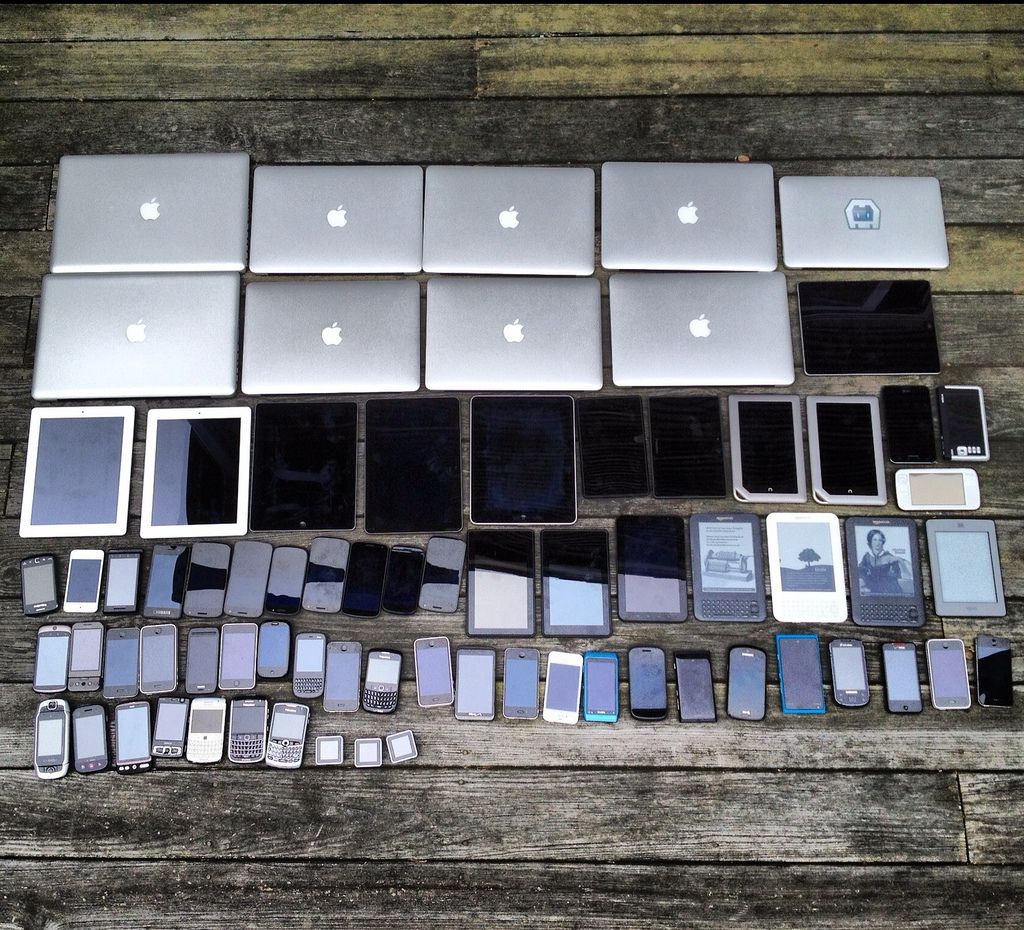
No fewer than 33 mainstream connected devices were released in the past two months. Unless you're a writer for The Verge there's no way in hell you're going to be able to keep track of every device make, model, manufacturer, capability, carrier and every combination thereof.
Fatigued
I suffer from device fatigue. The exponential growth of connected devices coming down the pipes has caused me to shut down. I just don't care anymore. Not that kind of "I just don't care anymore," but rather a realization that it's increasingly futile to concern myself with every device that gets spit out of the ol' rectangle factory. "Have you seen the iPad Mini!?" Yeah, neat. "OMG Microsoft Surface." Sure, looks promising. "Samsung Galaxy Nexus S3 4G LTE Lightning Edition" Yup. Keep em' coming.
My remedy for device fatigue has been to take a step back and let my eyes go unfocused. Much like a Magic Eye, I can then see the hidden pictures behind the stippled noise that is the device landscape. This remedy helps me cope, gets me to stop caring about things that don't really matter, and gets me to care about the broader trends the Magic Eye unveils.
Totally #Trending
Instead of concerning myself with specifics, I'm able to focus on where things are going. Here's what trends I'm seeing now:
- Touch - Unsurprisingly, touch is here to stay and is quickly pervading the desktop world. Touch opens up entirely new opportunities and is challenging previous design norms.
- Android - Android is growing 6 times faster than iOS. Given the nature of the platform, expect Android devices to continue to spread like wildfire. We'll see Androids in every shape, size, color and form possible.
- Windows - Windows 8 is creating a world where multiple input methods are natural and has the potential to disrupt the lets-all-just-mimic-iOS mentality.
- Content everywhere - People are expecting more from their device ecosystem and are are getting used to the concept of seamlessly jumping from device to device. Content parity is more important than ever.
There's more to it than this, but you get the point. Come back in a year and these trends will most likely be entirely different.
Of course we still have jobs to do. At some point we have to actually make things for real people that are using real devices. But by not getting bogged down by every specific speed bump we encounter, we're able to plan ahead and focus on what really matters in the grand scheme of things.
Future Friendly
Disruption will only accelerate. The quantity and diversity of connected devices—many of which we haven't imagined yet—will explode, as will the quantity and diversity of the people around the world who use them. —Future Friendly
Presently, it's still possible to keep up with every device out there right now, but just wait until we have a load of bears, bats and bees on our hands. It's just a matter of time before it becomes literally impossible to keep track of every connected gizmo on the face of the earth.
The way I see it, the goal is to get to a point where you can walk into a carrier store, blindly pick up any device, fire up your project and behold it in all its glory. The goal is to get a point where your organization doesn't go into cardiac arrest every damn time Apple holds a keynote. The goal is to assume less and reach more people as a result.
In the words of the great Lyza Danger Gardner, relinquish control and lay down your burdens.